
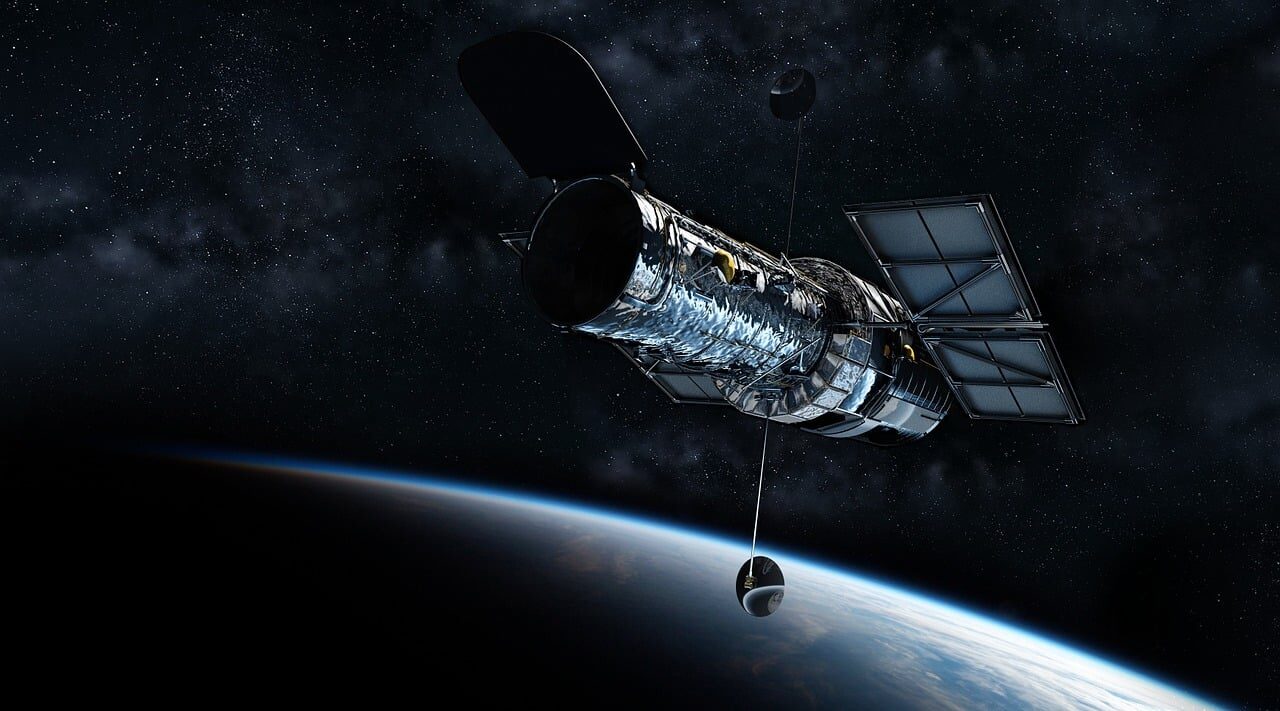

What if satellites disappeared?
Imagine waking up tomorrow and every satellite in orbit had vanished. No explosions. No warning. Just gone. Within minutes, life would begin to break down. GPS apps would fail, flights would lose guidance, banks would glitch, and weather forecasts would lose accuracy. Satellites may be invisible to most people, but they quietly power much of the world that keeps the life running smoothly.
The Immediate Global Impact
The first problems would hit GPS and travel. Apps like Google Maps and Uber rely on satellites to work. Without them, directions, rides, and deliveries would stop. Planes, ships, and trucks would have to use slower and less accurate ways to navigate.
Money systems would also have trouble. Satellites send time signals that banks use to record stuff. ATM’s and payment networks need this shared time to work right. Without it, payments could fail, records could go out of sync, and networks could crash.
Weather forecasts would get worse too. Scientists use satellite images to watch hurricanes, fires, and storms as they form. Without this data, warnings would come later and predictions would be less accurate. That would raise the risk for towns, cities, and emergency crews.
(If you like this content, check out more: https://csinha.org/blog/)
Long-Term Consequences for Society
Communication systems would fail fast. Satellites help run TV, global calls, rural internet, and emergency lines. Without them, many areas would lose contact. Rescue teams would also lose reliable ways to talk.
Science would slow down too. Satellites track sea levels, polar ice, air gases, and global temperatures. Without this data, it would be harder to study Earth or predict future changes.
Conclusion
Satellites work quietly, so people often forget about them. Yet they support travel, money systems, communication, science, and safety around the world. If satellites disappeared, it would show how much life depends on it.
References
- National Aeronautics and Space Administration (NASA) — Satellite Applications and Earth Observation Systems (https://science.nasa.gov/earth/earth-observatory/)
- National Oceanic and Atmospheric Administration (NOAA) — Weather Satellites and Forecasting Data (https://www.noaa.gov/weather)
- U.S. Department of Transportation — GPS and Timing Infrastructure Reports (https://www.transportation.gov/pnt)
- European Space Agency (ESA) — Earth Observation Missions and Climate Monitoring (https://www.esa.int/About_Us/Earth_observation)
- International Telecommunication Union (ITU) — Satellite Communication Systems Overview (https://www.itu.int/en/mediacentre/backgrounders/Pages/Regulation-of-Satellite-Systems.aspx)
No responses yet