
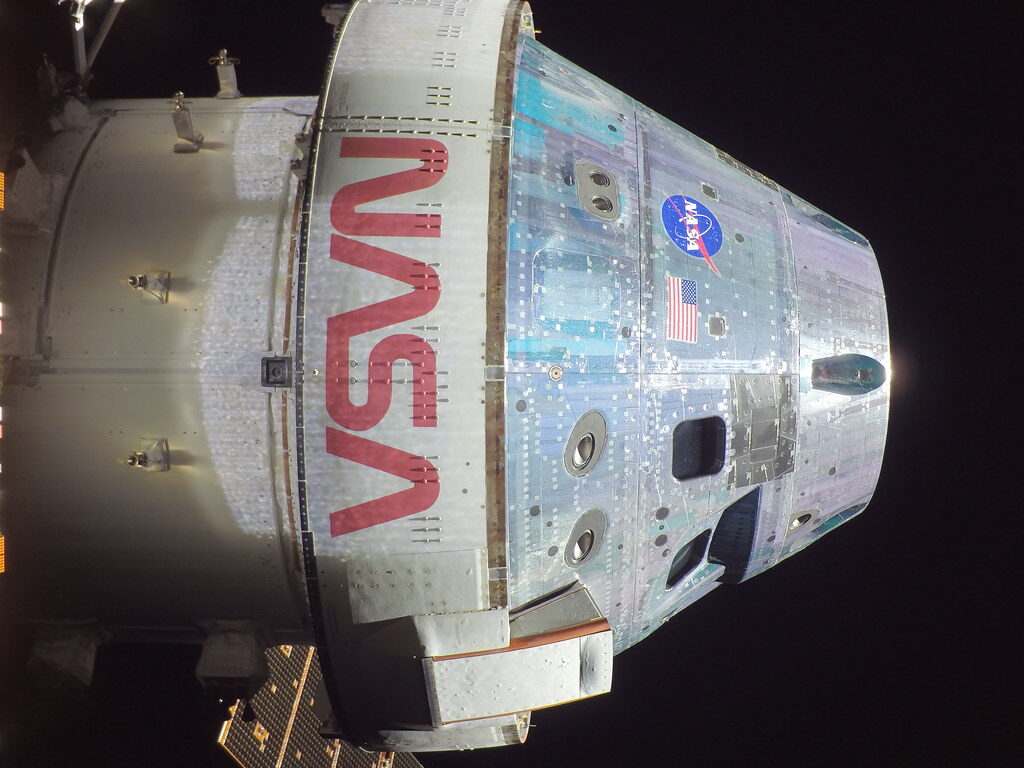

NASA has unveiled on March 4th that the manned landing for Artemis III was rescheduled for a later Artemis mission. So what will Artemis III do now?
Why is NASA rescheduling?
After the recent Artemis II launch failures, NASA has decided they want to re-analyze the situation placed around them. Instead of having the Artemis III mission be focused on placing human boots back on the moon, they want Artemis III to be more of a practice run before the big return.
Though launch delays are always expected in space travel, the SLS rocket (Space Launch System) is very new compared to previously tried and tested rockets, such as the Falcon-9, created and used multiple times beforehand. It has only ever had one real launch (Artemis I), and even then still had issues.
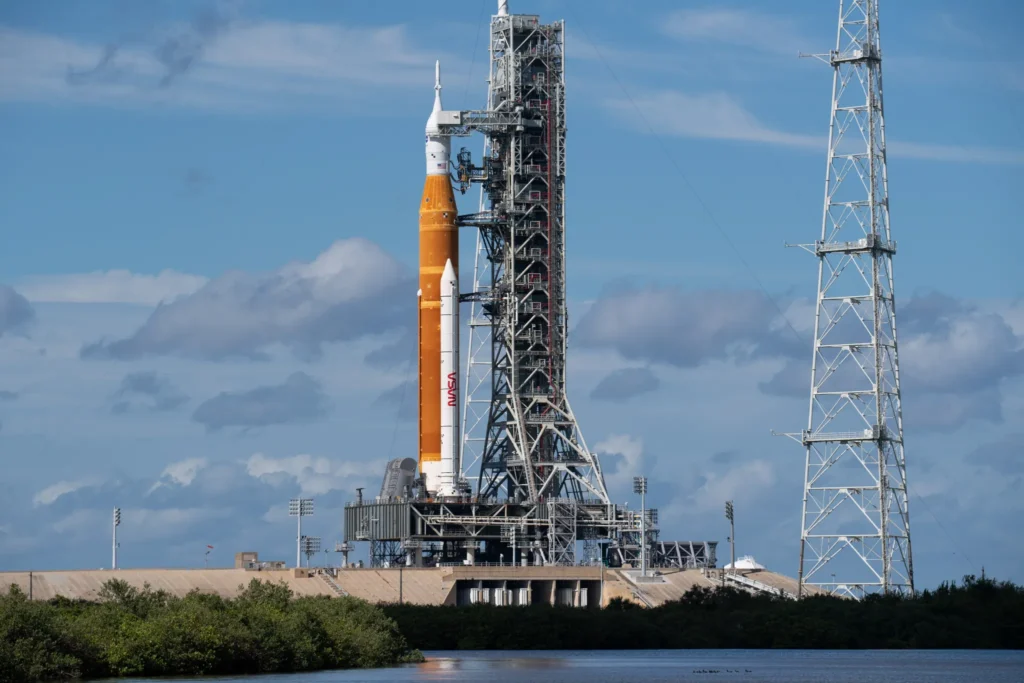
NASA’s Space Launch System (SLS) rocket with the Orion spacecraft aboard is seen atop the mobile launcher at Launch Pad 39B, Friday, Nov. 11, 2022, at NASA’s Kennedy Space Center in Florida. NASA/Joel Kowsky
What are the issues present?
The issues present with the Artemis missions are almost all primarily related to the rocket. The SLS rocket has had issues with fluid leakage since Artemis I. Liquid hydrogen is a fuel used in the SLS rocket. It is a very efficient chemical fuel, when combined with liquid oxygen. The issues with hydrogen is that it needs to be pushed externally to the engines. That is where helium comes in [1].
Helium is used to push propellant into the rocket ignition, and to “clean” out the fuel lines before the propellant flows. That is where the issues with the SLS come in. First, the hydrogen used to fuel the rocket was seen to be leaking in the Artemis II fuel test. This was an issue in the Artemis I mission, which also caused delays.
Second, there were also issues with the helium that would allow fuel flow. NASA engineers encountered problems with re-pressurizing the helium tanks, forcing them to roll the SLS back in the vehicle assembly building to troubleshoot then fix the problem [2].
what about Artemis III?
Because the Artemis II mission will have astronauts onboard, it is critical that NASA fixes the issues that have been troubling them since 2022. This will avoid any chances of anything going wrong in the mission, or any missions afterward, including Artemis III.
Artemis III was supposed to be the first landing back on the moon since 1972, but ever since these new issues have presented themselves, NASA wants to see if they can first maintain the infrastructure to go back to the moon in the first place.
The new Artemis III mission will focus on testing the new commercial landers from SpaceX and Blue Origin. It will test the rendezvous and docking capabilities between Orion and the landers needed to land astronauts on the moon. More information is planned to be given by NASA closer to its launch date in 2027 [3].
Want to learn about Wooden Satellites?
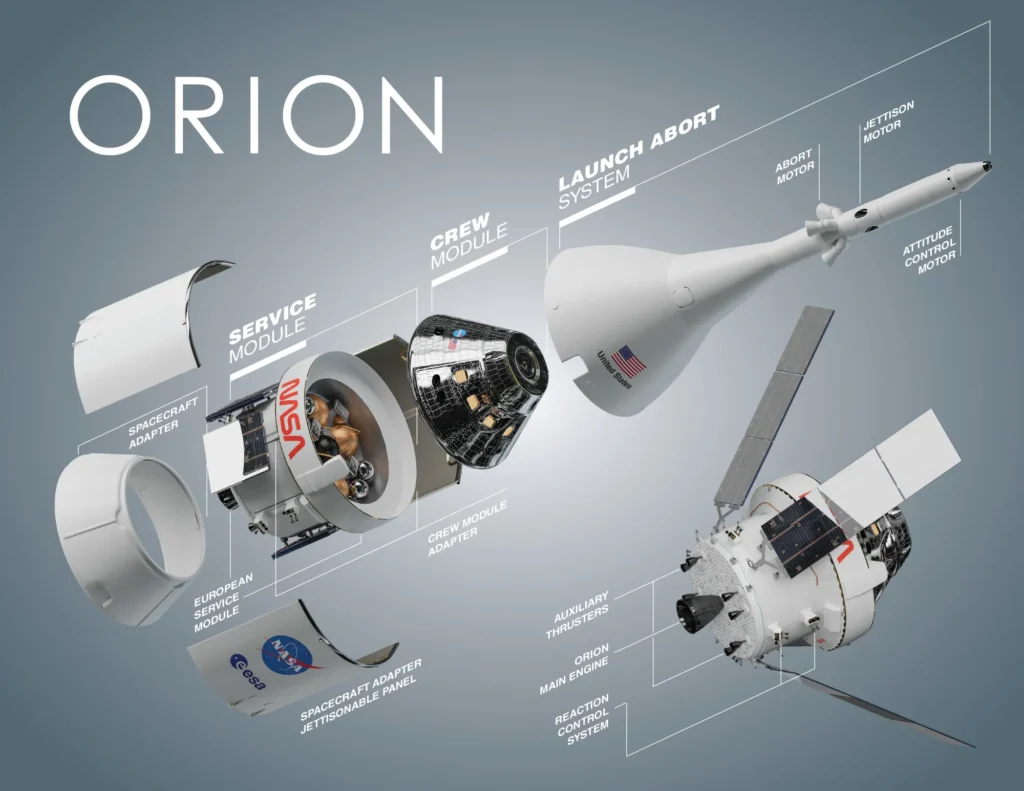
Components of the Orion spacecraft. NASA.gov
When do we see people on the moon?
NASA plans to use the Artemis IV mission in order to place humans back on the lunar surface. The crew will transfer from Orion, the capsule, to a commercial lander, either SpaceX or Blue Origin, for their descent to the lunar surface.
This mission will be one of the most complex missions conducted by NASA. It will explore the south pole of the moon, using the astronauts observations, samples, and data collected from instruments to help humanity in its mission to understand the universe. They will spend about a week on the lunar surface before returning back to Earth using the Orion capsule as the re-entry vehicle.
What happens after?
Not much is known about Artemis V, but NASA plans to begin building its Moon base by late 2028 through Artemis V. This moon base will boast an infrastructure supporting future missions to other planets such as Mars, Venus, and even beyond to the Asteroid Belt, and even to other planets moons such as Europa (A moon of Jupiter)! [4]
Conclusion
In conclusion, due to ongoing issues with the Space Launch System, specifically the hydrogen leaks and helium pressurization problems, NASA is shifting its Artemis program timeline to prioritize safety and reliability over speed.
Artemis III will now serve as a test mission for systems like commercial lunar landers and orbital docking rather than a lunar landing. This allows NASA to better prepare for a more successful and sustainable return to the Moon with Artemis IV, which is expected to land astronauts and begin deeper exploration efforts, ultimately laying the groundwork for future missions to Mars and beyond.
References
[1] E. Peters, “Artemis I – NASA,” NASA, Mar. 27, 2024. https://www.nasa.gov/mission/artemis-i/
[2] J. Dinner, “NASA had 3 years to fix fuel leaks on its Artemis moon rocket. Why are they still happening?,” Space, Feb. 03, 2026. https://www.space.com/space-exploration/artemis/nasa-had-3-years-to-fix-fuel-leaks-on-its-artemis-moon-rocket-why-are-they-still-happening
[3] NASA, “Artemis III – NASA,” NASA, 2026. https://www.nasa.gov/mission/artemis-iii/
[4] NASA, “NASA Strengthens Artemis: Adds Mission, Refines Overall Architecture – NASA,” NASA, Mar. 03, 2026. https://www.nasa.gov/directorates/esdmd/nasa-strengthens-artemis-adds-mission-refines-overall-architecture/
No responses yet